Dissertation Research on Whiteness Featuring Participatory Action Research Methods
In June 2021 I defended my dissertation titled “Naming and Dismantling Whiteness in Art Museum Education: Developing an Anti-Racist Approach.”
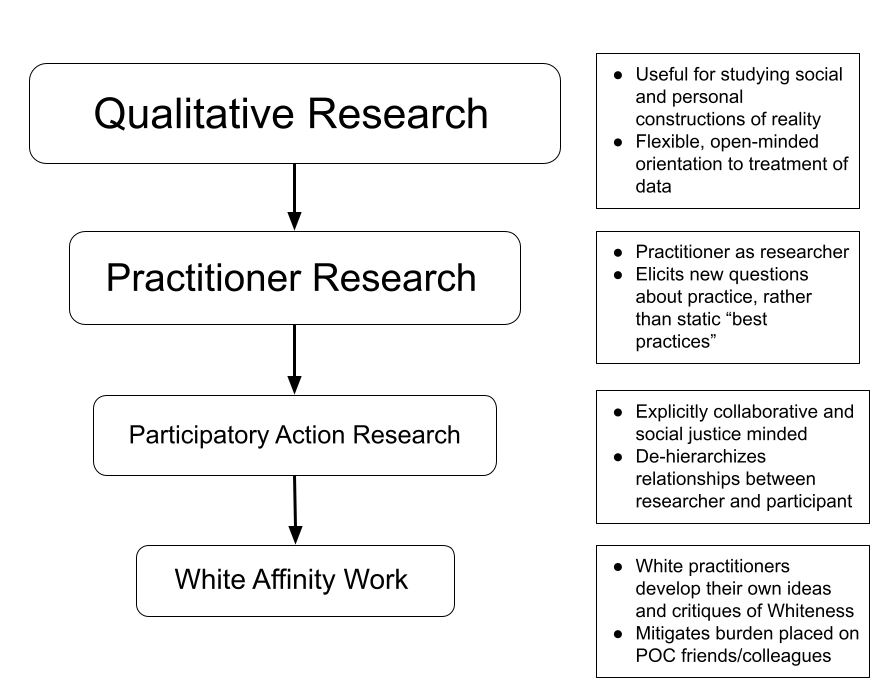
Utilizing participatory action research, practitioner inquiry, and a White affinity group model, this qualitative self-study explores aspects of Whiteness that impact the gallery teaching practices of four White art museum educators.
My Role: Principal Investigator
Timeline: July 2019-June 2021
Research questions
How does Whiteness manifest in art museum gallery teaching for four White museum educators?
How might perceived impacts of our Whiteness shift depending on the racial demographics of the groups we are teaching?
What issues or questions arise when four WME’s gather to discuss impacts of Whiteness in their museum teaching?
How, if at all, does a co-reflexive, participatory exploration of their Whiteness over time influence their thinking and practice, particularly as it pertains to discussing race with museum visitors?
What are participants’ perceptions about the value of a White affinity group?
Methodology
I treated myself as a participant alongside three other White museum educators, and together as a practitioner inquiry group we co-generated our research questions and agreed to our research methods.
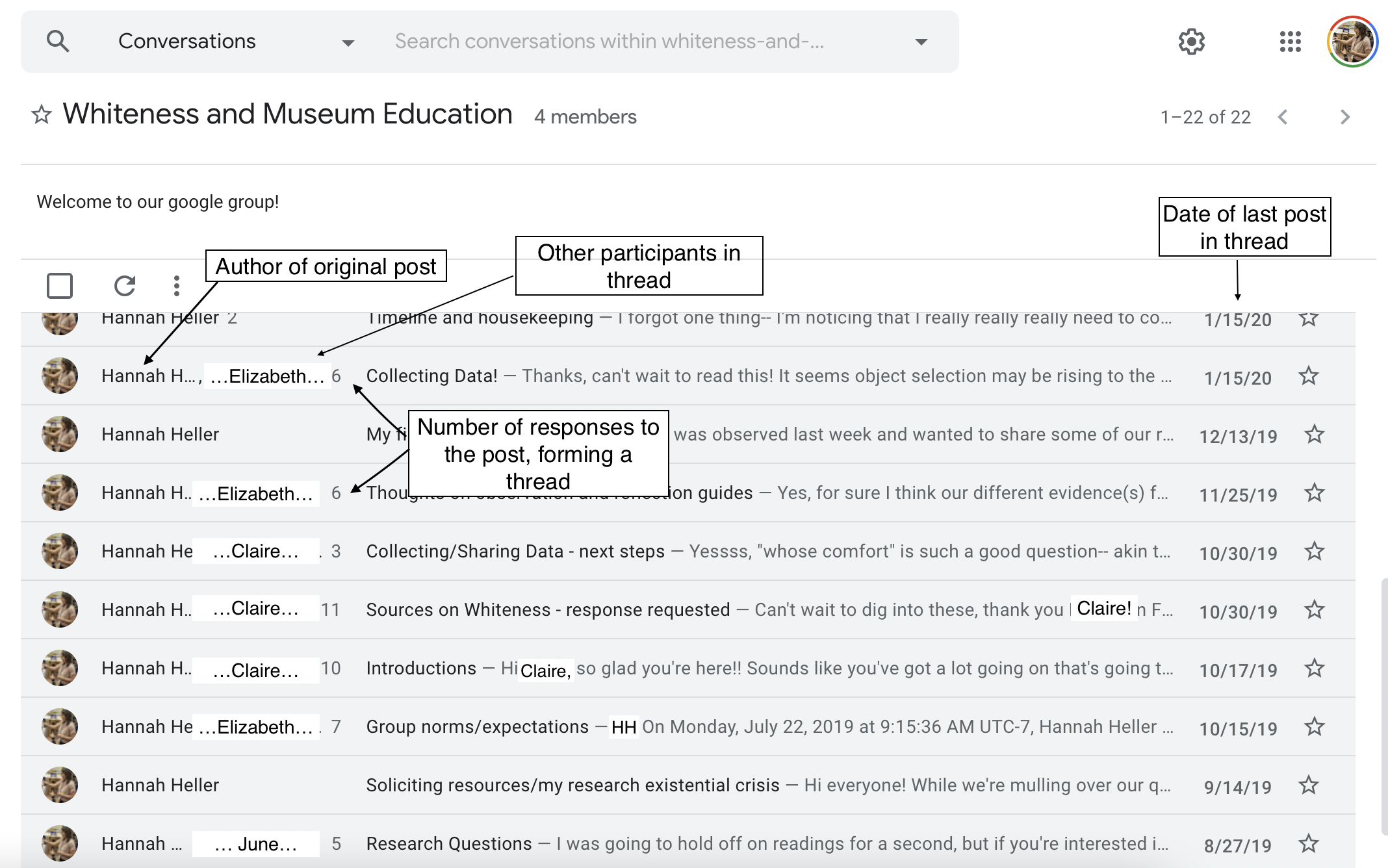
Together we formed a digital space using Google Groups (see image below) in which we could communicate with each other, discuss observations of our teaching, reflective writing responding to the observations, and conversations in the digital space based on these writings.
This period of data generation was followed by interviews between myself and each participant as well as a focus group with all four of us.
Findings
Each WME engaged in various avoidance techniques in our teaching to avoid race talk or push our anti-racist teaching more deeply. Our avoidance pointed to perceived tensions we felt between our trainings and the demands of anti-racist teaching, as well as the limitations of the single visit field trip model.
We also experienced anxiety when discussing Blackness in particular, as well as problematic assumptions about both White students and students of color we work with.
Analysis of these findings provide insights into the ways art museum pedagogies in addition to critical emotional pedagogies might be deployed towards antiracist teaching, as well as the emotional qualities of naming and dismantling Whiteness as White practitioners.
Implications for Further Research
While the findings are limited to the four museum educator participants and the specific contexts in which we work, this study points to ways we might begin to develop deeper understandings of how Whiteness might impact gallery teaching practices. More importantly, in the tradition of practitioner inquiry, this study raises important questions around how visitors of color experience Whiteness in museum education programs, how professional development might be reimagined for museum educators, as well as ways to rethink the traditional single visit field trip model to better accommodate anti-racist learning goals.